Five microgreen families, what each one does on a plate, and how Montreal kitchens pair them with specific proteins, acids, and raw preparations. A practical walkthrough for sous chefs writing tomorrow's menu.
The thing most kitchens get wrong about microgreens is treating them as one category. A peppery red mustard does something completely different on a plate than a sweet pea shoot or a delicate bronze fennel, and a chef ordering "microgreens" without specifying the family is going to end up with the wrong texture on the wrong protein more often than not.
Here are the five working families, what each one does, and how we see Montreal kitchens using them on the line.
1. Peppery — mustard, kale, wasabi arugula
The peppery family is the workhorse. Red mustard, red kale, and wasabi arugula all deliver a sharp back-of-palate heat that cuts fat — which means they earn their place on beef tartare, duck confit, pork belly, and any raw-fish preparation that needs a lift. Red mustard is the most aggressive of the three; wasabi arugula is rounder but finishes hot. If a dish is already carrying heat (chili oil, fresh ginger), step down to kale microgreens instead; they have the structure without the clash.
2. Anise and fennel — bronze fennel, dill, confetti coriander
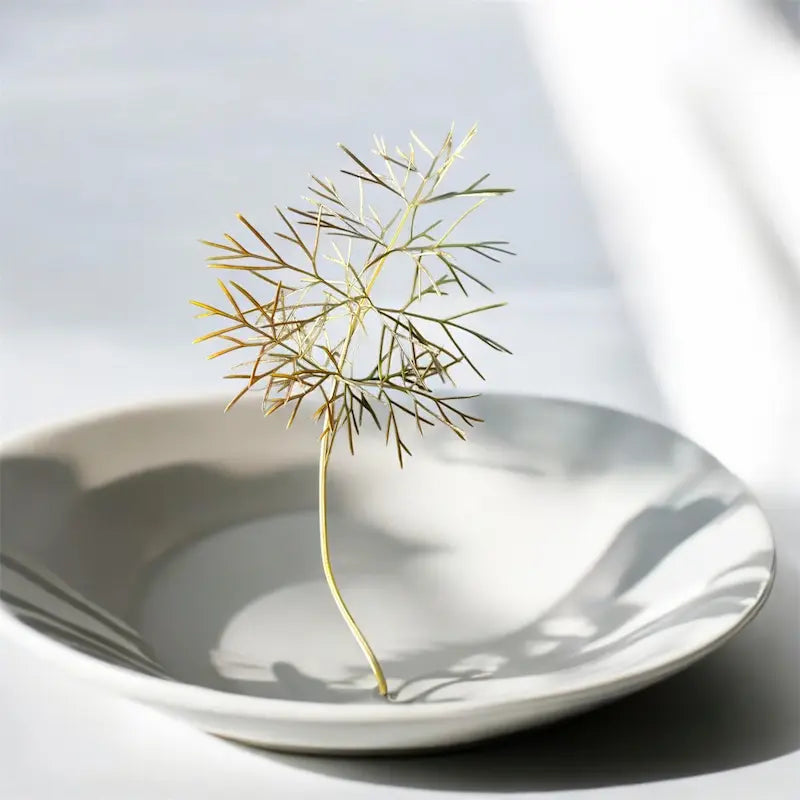
Delicate, perfumed, and visually precise. Bronze fennel is the fine-dining choice — feathery, deeply pigmented, and lighter than full dill in both weight and flavor. It lives on seafood amuse-bouches, roasted root vegetables, and any preparation that would traditionally take fennel pollen. Dill microgreens sit alongside smoked fish and cream sauces. Confetti coriander is for plates where the kitchen wants the cilantro note without cilantro's visual chaos — cleaner, more controlled.
3. Shoots — pea, sunflower, corn
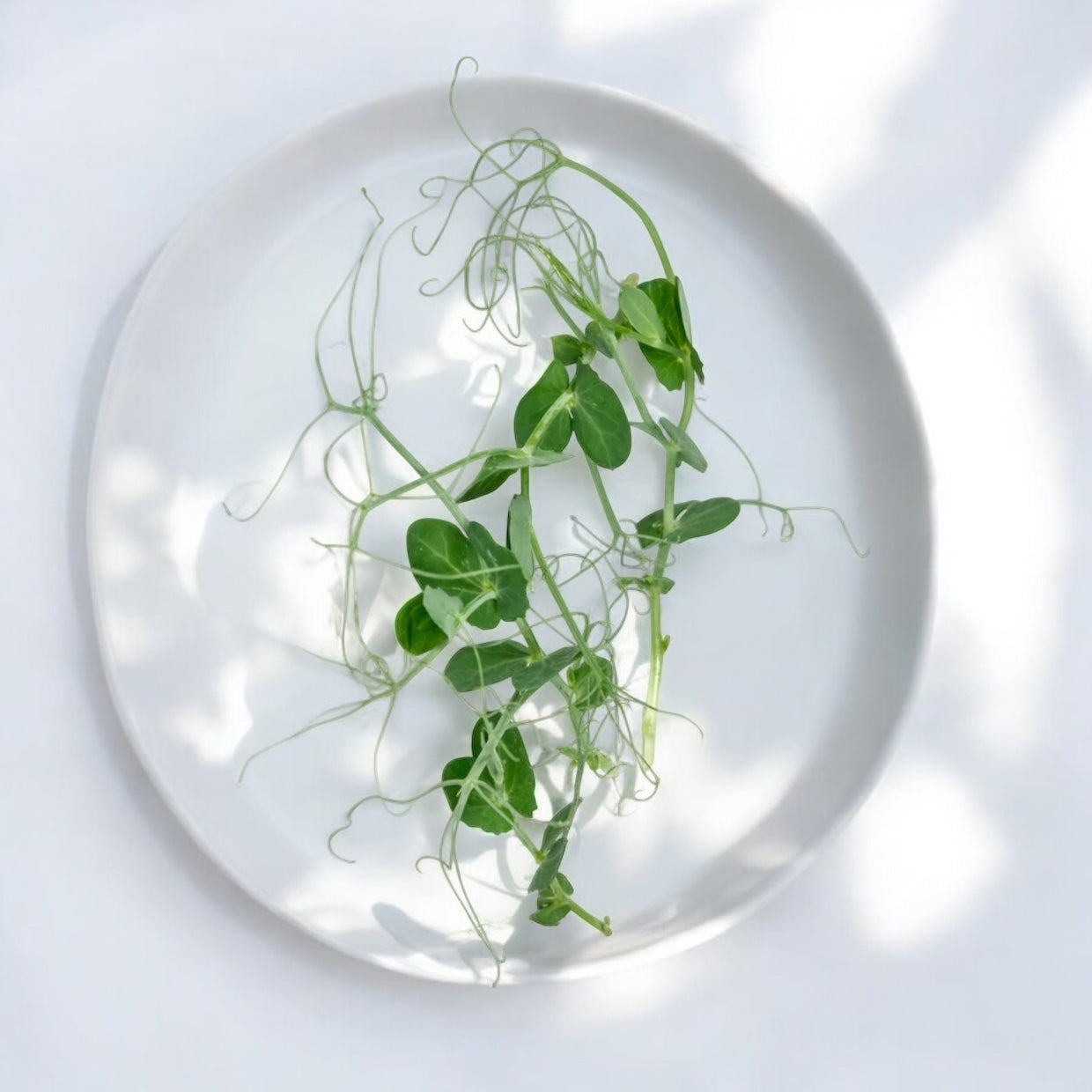
Structural. Pea shoots, sunflower shoots, and corn shoots have real bite and real size — they occupy space on a plate the way a full herb would, not the way a garnish would. Pea shoots are sweet and grassy, and they finish a dish: scallops with pea purée, rabbit loin with spring vegetables, asparagus anything. Sunflower shoots have a nutty, almost artichoke-adjacent note that works with roasted squash and mushroom preparations. Corn shoots are a summer move — sweet, tender, and paired with stone-fruit or heirloom tomato plates.
4. Herb-adjacent — Thai basil, shiso, cilantro, micro basil
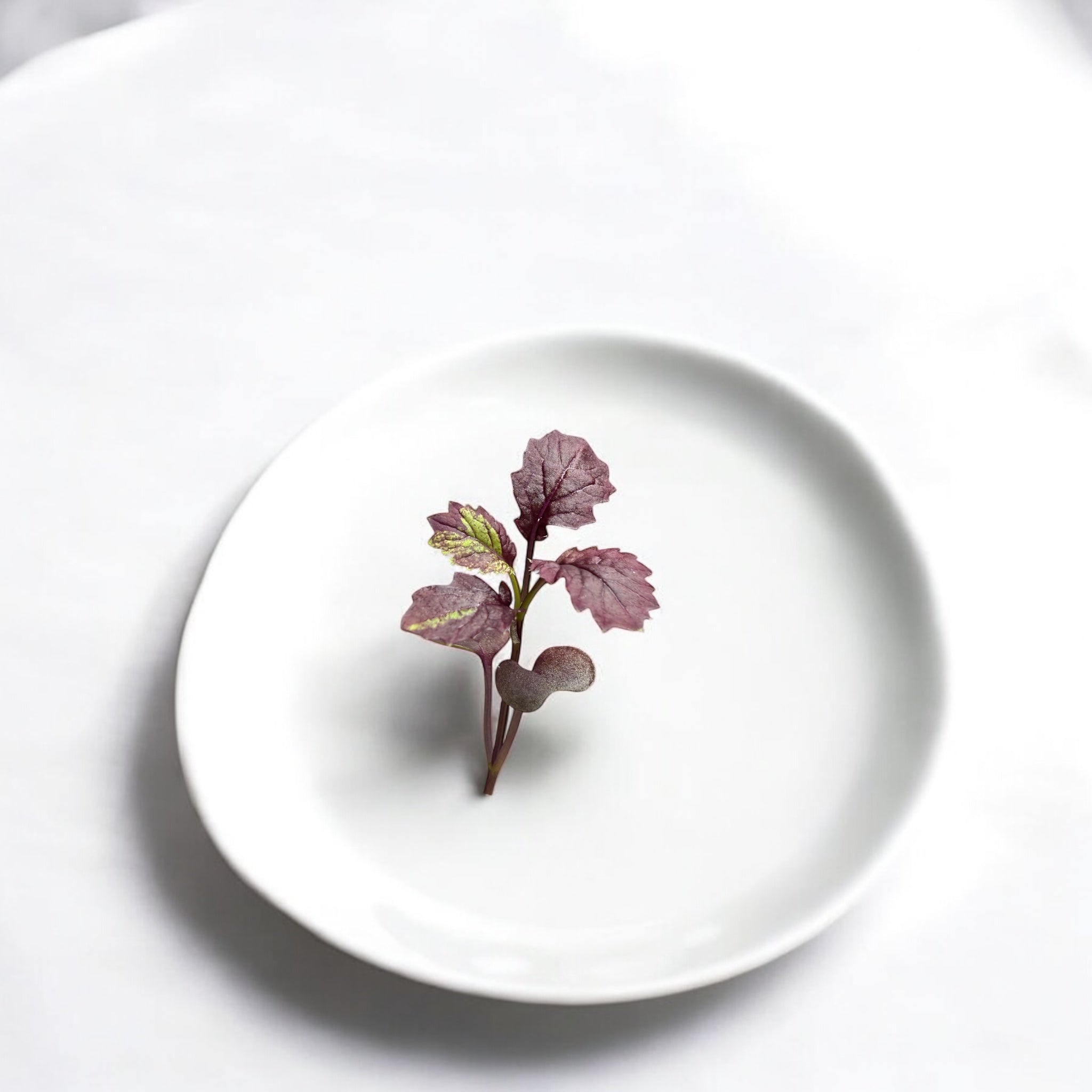
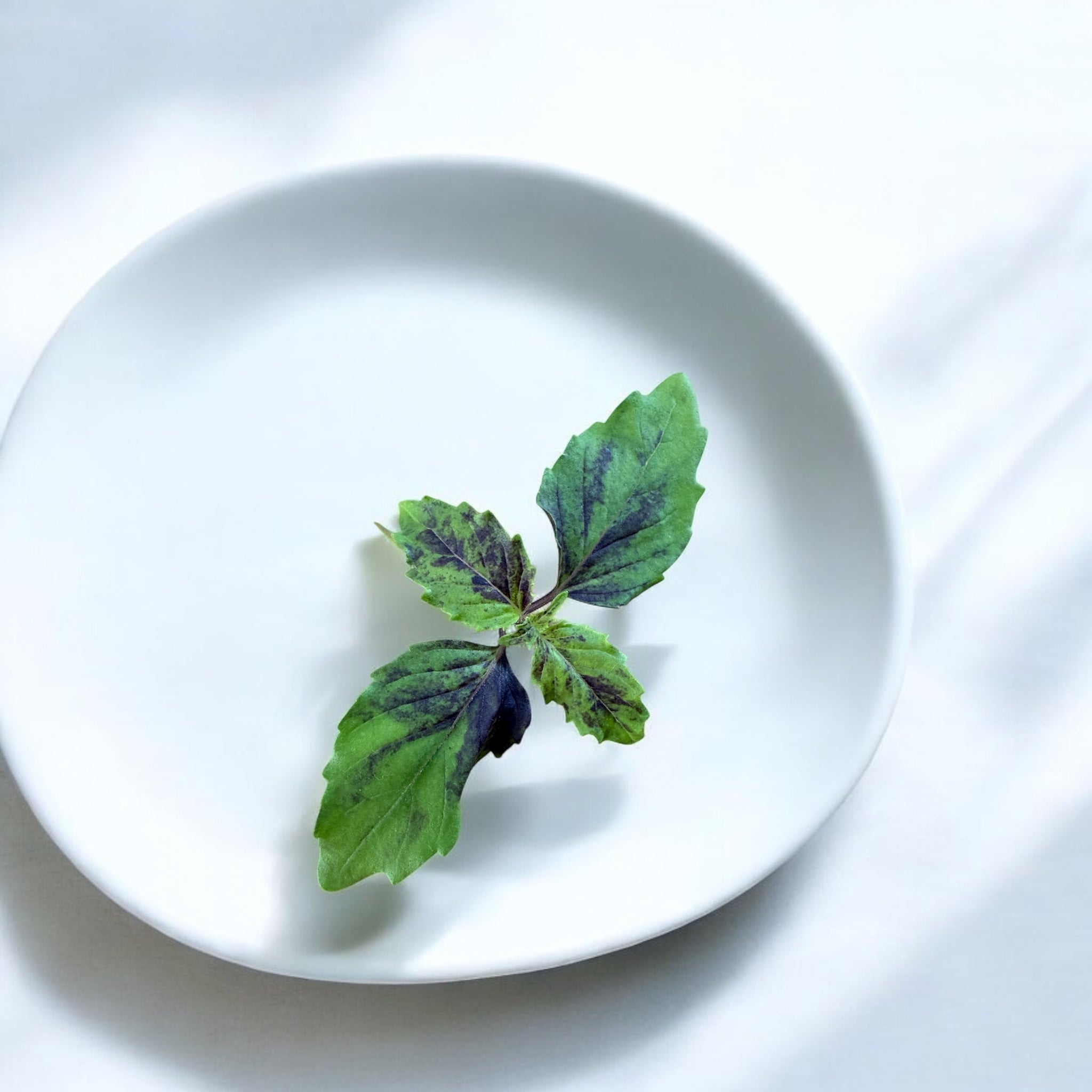
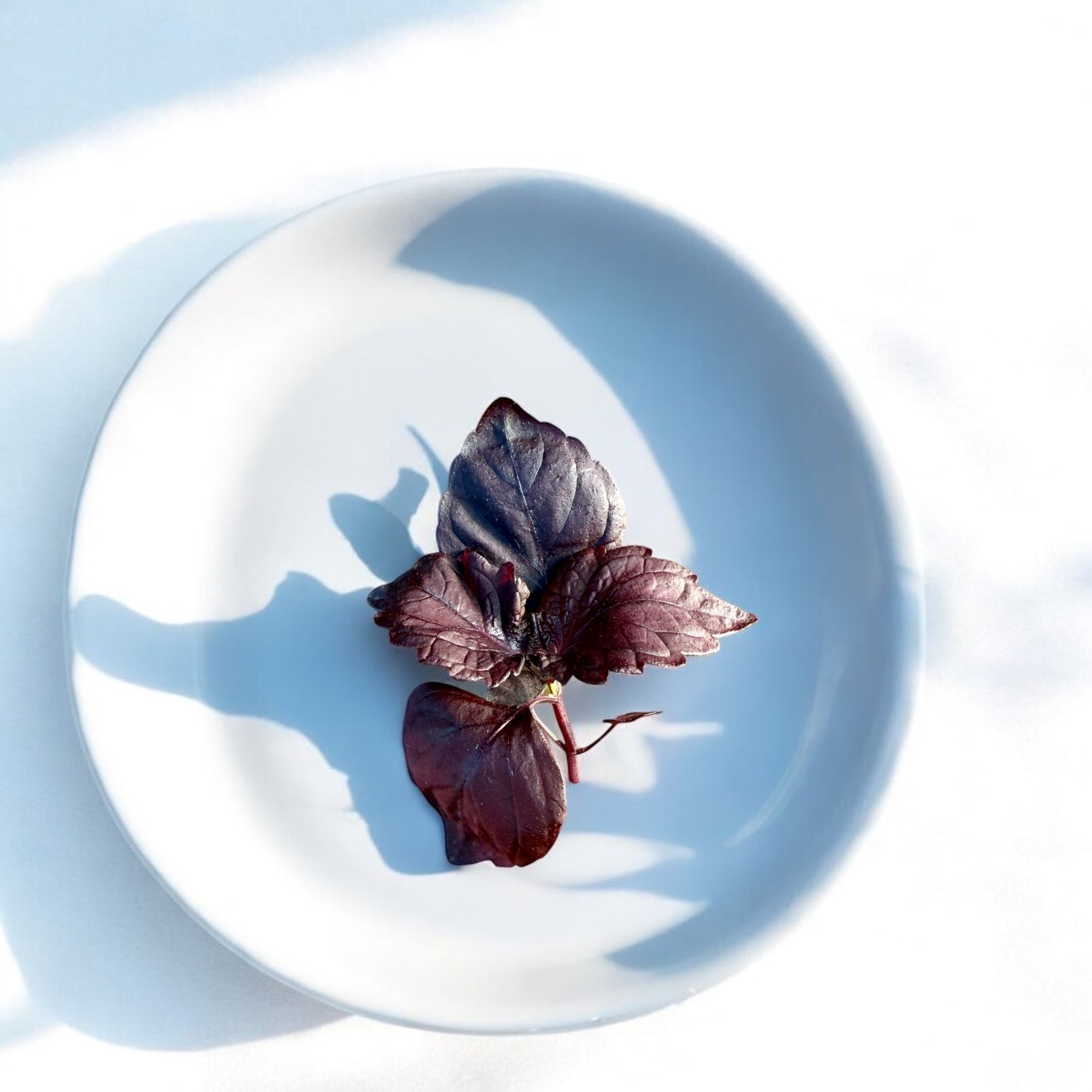
The herb family carries the full aromatic weight of its mature counterpart at a fraction of the size. Thai basil microgreens land on Southeast Asian preparations — crudos, cold noodle plates, summer rolls — anywhere a large basil leaf would be too much. Red and green shiso are classical Japanese plate finishers, and they do the work on sashimi and tataki preparations the way the mature leaf would on a sushi plate, but at a chef-plate scale. Cilantro microgreens go everywhere cilantro goes — but cleaner, lighter, and without the leaf-structure noise.
5. Shiso, amaranth, and edible flowers — the finishing family
The last family is about color and precision. Red shiso and bulls blood beet microgreens carry burgundy tones that anchor a pale protein. Amaranth delivers fuchsia that reads as "plated with intention" the moment a guest sees the dish. Edible flowers — snapdragons, begonias, violas, nasturtiums — are the final punctuation on tasting-menu courses and summer salad plates.
A few plating rules
A handful of practical notes that hold across the families:
- Add last. Microgreens wilt from ambient heat faster than the kitchen thinks. Finish other components, then add the greens as the plate leaves the pass.
- Dry plate, dry greens. A wet spot on the plate (sauce, purée) will collapse a microgreen within forty seconds. If the greens need to sit on something wet, use a shoot or an edible flower — they hold up.
- Don't smother. Three to five pieces carry a flavor note. Fifteen pieces look like a pile of grass.
- Pair acid carefully. A direct hit of citrus or vinegar on a delicate microgreen (bronze fennel, confetti coriander) kills it visually. Place the greens next to the acid, not under it.
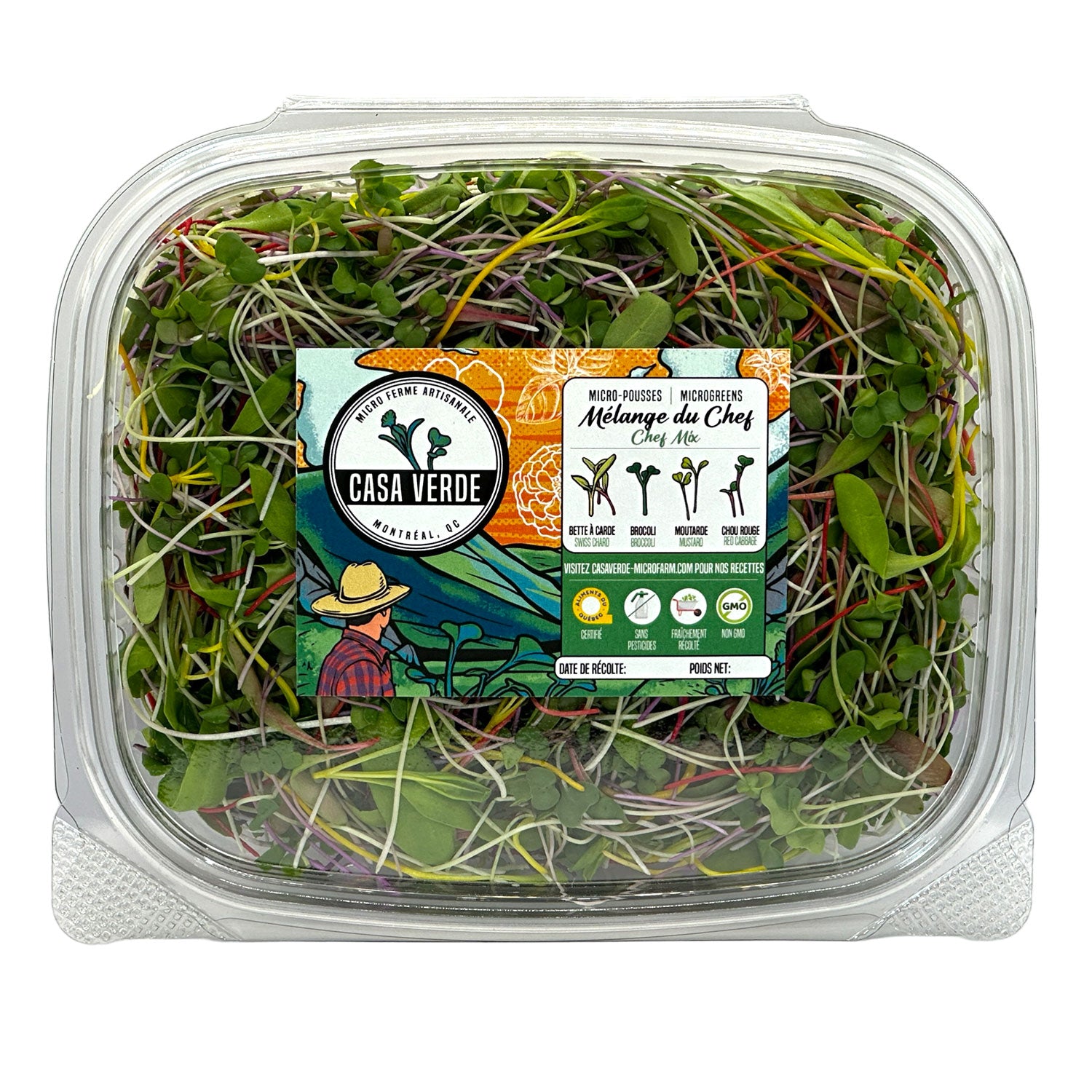
For a working sampler across all five families, most Montreal kitchens start with the Chef Pack — seven varieties sized for a single weekly delivery, enough to build a pilot week of menu before committing to a standing order.